
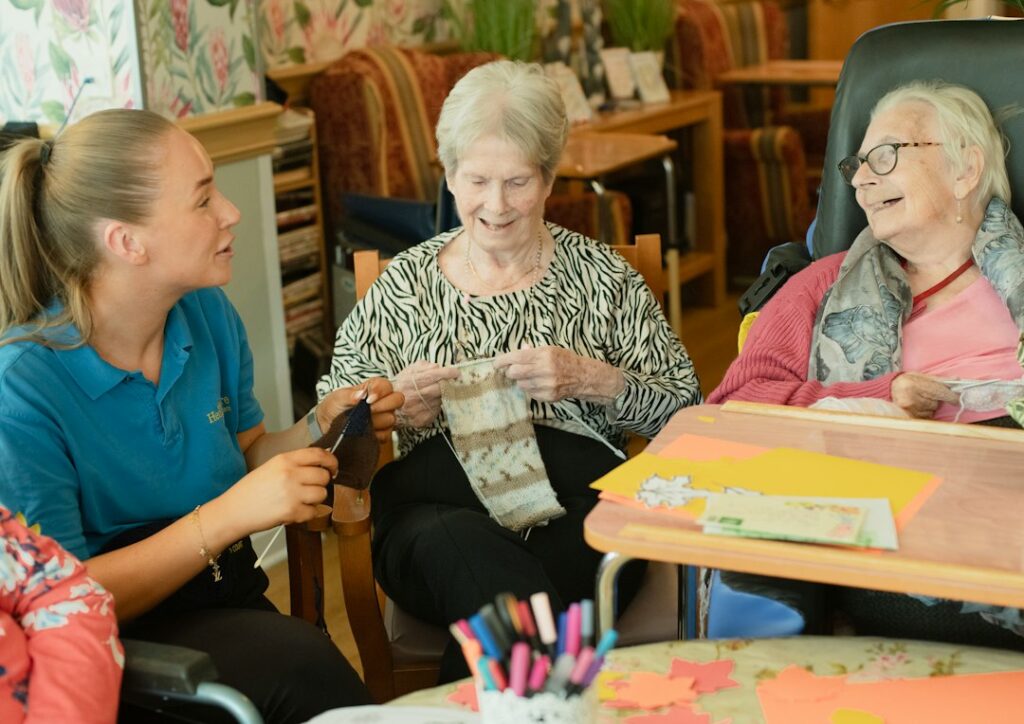
Creative hobbies can help older adults stay engaged, express personal interests, and maintain a sense of routine in assisted living. Activities do not need to be expensive, complicated, or physically demanding. The most successful options are usually flexible, familiar, and easy to adapt to changing abilities.
For residents in Charleroi, PA, seasonal weather may also affect daily routines. Creative activities provide useful indoor alternatives during cold, rainy, or very hot conditions, while selected projects can connect residents with local memories, household traditions, and the changing seasons.
What creative hobbies work well in assisted living?
The most suitable hobbies are enjoyable, manageable, and adjustable. Residents should be able to participate while seated, take breaks, and complete only part of a project without feeling unsuccessful.
Good choices include:
- Drawing, coloring, and watercolor painting
- Knitting, crocheting, and simple sewing
- Collage-making and greeting-card projects
- Music, singing, and rhythm activities
- Writing, storytelling, and memory journals
- Flower arranging and seasonal decorations
- Photography and picture-based activities
- Simple woodworking or craft projects with proper supervision
- Baking, recipe sharing, and food-related demonstrations
- Puzzles, model building, and other hands-on activities
A hobby is more likely to remain meaningful when residents can make personal choices. Selecting colors, songs, materials, subjects, or project themes can be just as valuable as finishing the activity.
How can art activities be adapted for different abilities?
Art projects can be modified through larger materials, shorter sessions, improved lighting, and stable work surfaces. The goal is participation rather than producing a perfect final product.
For residents with limited hand strength or reduced vision, useful adjustments may include:
- Large-handled brushes, pens, and scissors
- Paper with bold outlines or large shapes
- Lightweight containers that are easy to open
- Non-slip mats beneath supplies
- Pre-cut materials for collage or card projects
- Easels or angled boards that reduce bending
- High-contrast colors that are easier to distinguish
- Step-by-step demonstrations rather than lengthy written directions
Watercolor painting, sponge painting, and decorating pre-drawn designs can be less demanding than detailed drawing. Residents who tire easily may enjoy choosing colors or directing another participant while someone else handles cutting or setup.
Projects should not be treated as tests of memory, coordination, or artistic skill. A resident who paints only one section, selects materials, or talks about a finished piece has still taken part meaningfully.
Are music and storytelling creative hobbies?
Yes. Music and storytelling are creative activities that can involve residents who do not consider themselves artistic. Singing familiar songs, playing simple rhythm instruments, or listening to music from different periods can encourage conversation and emotional expression.
Music activities may include:
- Group singing with familiar songs
- Creating personal playlists around life experiences
- Tapping rhythm instruments such as shakers or hand drums
- Discussing songs connected to school, work, holidays, or family
- Listening sessions followed by conversation
- Writing new words to a familiar melody
Storytelling can be organized around themes such as first jobs, favorite meals, household traditions, childhood games, or memorable weather events. Residents may prefer speaking, dictating, writing, or simply listening to others.
A memory-based conversation should not become a quiz. Asking open-ended questions is generally more comfortable than asking residents to recall exact dates or details. The purpose is connection, not testing.
Which hobbies support memory and self-expression?
Writing, scrapbooking, photo sorting, and recipe projects can help residents organize personal experiences in a comfortable way. These activities may be especially appealing to people who enjoy preserving family history or passing knowledge to younger relatives.
Possible projects include:
- A life-story notebook with short entries
- A collection of favorite family recipes
- A seasonal scrapbook
- Labels or captions for photographs
- A “things I have learned” booklet
- A memory box containing copies of letters, postcards, or safe keepsakes
- A community bulletin display featuring resident artwork or writing
Some residents may remember emotions, routines, or sensory details more easily than names and dates. A prompt such as “What did the kitchen smell like?” may encourage richer conversation than “What year did that happen?”
Privacy should be respected. Residents should choose which photographs, stories, or family details can be displayed or shared.
What are good creative hobbies for residents with dementia?
Residents living with dementia may benefit from familiar, sensory, and process-focused activities. Projects should emphasize enjoyment during the activity rather than completion or accuracy.
Helpful options may include:
- Sorting fabric by color or texture
- Folding towels or arranging safe craft materials
- Decorating simple shapes
- Listening and responding to familiar music
- Looking through picture books
- Arranging artificial flowers
- Painting broad strokes on large paper
- Kneading dough during a supervised baking activity
- Matching photographs with familiar objects

Instructions should be brief and offered one step at a time. Demonstrating an action may work better than explaining several steps verbally.
Avoid correcting every mistake. If a resident places materials in an unexpected order but appears comfortable and engaged, the activity may still be serving its purpose. Watch for signs of frustration, fatigue, or overstimulation and adjust the pace.
How can creative hobbies remain safe?
Safety depends on the resident’s abilities, the materials, and the setting. Activities involving heat, sharp tools, small parts, strong adhesives, or chemicals require appropriate supervision and storage.
Basic precautions include:
- Keeping scissors and needles suitable for the user’s ability
- Avoiding loose small parts for residents at risk of choking
- Using non-toxic, low-odor supplies
- Securing tables and chairs before beginning
- Providing good lighting without glare
- Keeping walkways clear of boxes, cords, and finished projects
- Checking for allergies or skin sensitivities
- Offering seated options for residents with balance concerns
- Allowing rest breaks and access to water
Residents with reduced vision, tremors, arthritis, or memory changes may need different adaptations. Staff and family members can help determine which materials are appropriate, especially when an activity involves heat, tools, food preparation, or any potential hazard.
Can hobbies be connected to the seasons?
Seasonal projects can make activities feel timely without requiring residents to leave the building. In Charleroi, changing weather may provide familiar themes for conversation and creative work.
Examples include:
- Spring flower paintings or seed-themed crafts
- Summer postcard designs and fruit-inspired art
- Autumn leaf rubbings using collected leaves
- Winter paper snowflakes, fabric decorations, or holiday cards
- Weather journals that track temperature, rain, or snowfall
- Decorating a shared display with seasonal colors
Seasonal activities may also bring back memories of gardening, school calendars, family celebrations, or preparing a home for colder weather. The project can be simple; the conversation surrounding it may be the most valuable part.
How often should residents participate?
There is no single ideal schedule. Many residents benefit from short, predictable sessions several times a week rather than occasional activities that last too long.
A practical session might include:
- Five to ten minutes for setup and explanation
- Twenty to thirty minutes of active participation
- Time for conversation, cleanup, or displaying the finished work
- A flexible stopping point for anyone who becomes tired
Some residents will prefer independent hobbies, while others enjoy a small group. Offering both choices helps accommodate different personalities, energy levels, cultural backgrounds, and comfort with social interaction.
The best creative hobby is one that gives the resident a reason to look forward to the activity, make a personal choice, or share something meaningful with another person. The finished craft may be temporary, but the sense of involvement can last well beyond the session.
